
Productized Event Revenue System
*Identifying information is omitted to comply with client confidenitality.
BEFORE
-
Revenue tied directly to service delivery and internal capacity
-
Event execution required hands-on coordination for each campaign
-
Limited ability to scale without increasing operational complexity
-
No structured system to support a repeatable revenue model
AFTER
-
Expanded from service-based delivery to a scalable, system-driven revenue model
-
Reduced dependency on manual execution and internal bandwidth
-
Established a repeatable framework for generating event revenue
-
Positioned the firm to scale revenue through infrastructure
.png)
Context
A boutique events firm sought to expand beyond client services by developing a scalable revenue system for event hosts.
The vision was clear: create a system that could guide users from lead capture to event revenue without requiring manual coordination.
What was missing was the operational structure to make that vision executable and repeatable.
Operational Problem
The firm was moving into a new business model — from delivering events to enabling others to run them.
This required more than tools or automation.
It required:
• a defined revenue journey
• consistent workflow logic across campaigns
• systems that could operate without constant oversight
• infrastructure that could support multiple users
The core challenge wasn’t building features.
It was translating a conceptual offer into a functioning system.
Strategic Intervention
The work began by clarifying how event revenue should actually function at a systems level.
This included defining:
• how leads enter the ecosystem
• how engagement is maintained over time
• what triggers movement toward a purchase decision
• how revenue progression should be tracked
From there, the focus shifted to designing a system that could carry that logic consistently.
Rather than configuring a CRM, the backend was structured as a connected operational environment — where each stage of the user journey informs the next.
Key areas of focus included:
• aligning funnel entry points with downstream workflows
• structuring automation to support decision-making, not just communication
• designing a CRM and tagging logic that reflects real user behavior
• mapping a pipeline that mirrors the actual revenue journey
The system was intentionally designed to reduce reliance on manual input and create continuity across every stage of the experience.
Implementation
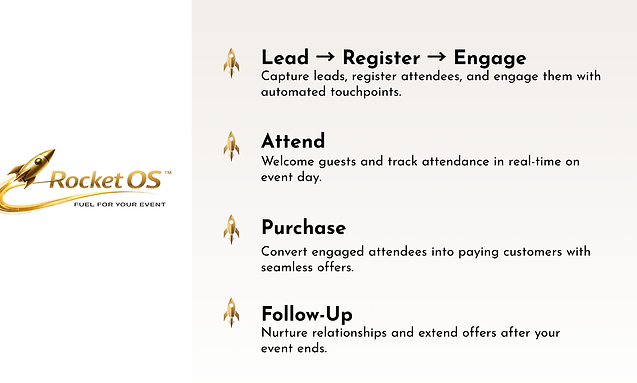
The strategy was translated into a connected system that moves contacts from entry through post-purchase.
This included:
• building a unified workflow across funnels, CRM, and pipeline
• automating data flow and stage progression based on behavior
• structuring the system to support multiple users without breaking logic
• embedding templates and tools to support consistent execution

Business Impact
The result was a productized event revenue system that transformed the firm’s original concept into a scalable offering.
The system enabled:
• a consistent lead-to-revenue experience across users
• reduced reliance on manual coordination
• clear visibility into engagement and conversion
• a backend structure capable of supporting growth
Most importantly, it allowed the firm to move from a service-based model to a system-driven revenue stream.
I work with founders and leadership teams who are ready to bring greater clarity and structure to how their business operates.
The right systems don’t just support growth — they make it sustainable.
If you're ready to strengthen the operational foundation of your business, the next step is a discovery call.