
Operational Audit & Proposal Infrastructure for an Architecture Firm
*Identifying information is omitted to comply with client confidenitality.
BEFORE
-
Proposal development handled manually across multiple documents and steps
-
Prospect follow-up and proposal tracking lacked a structured workflow
-
Internal roles and responsibilities not clearly defined across the team
-
Leadership balancing strategic work with operational coordination
-
Limited clarity into how to improve inefficiencies
AFTER
-
Comprehensive operational audit identifying workflow gaps and inefficiencies
-
Automated proposal generation and qualification workflows
-
Standardized Prospect → Client process with documented SOP
-
Executive time allocation strategy aligning leadership with strategic priorities
-
Organizational structure and team responsibilities clearly defined

.png)
Context
An architecture firm with 15 contractors sought to strengthen its operational infrastructure as it prepared for continued growth.
While the firm maintained steady client demand and a strong industry reputation, several internal systems had developed organically over time rather than through deliberate operational design.
Leadership engaged me to evaluate internal workflows and identify opportunities to improve efficiency across business development, internal coordination, and executive workload.
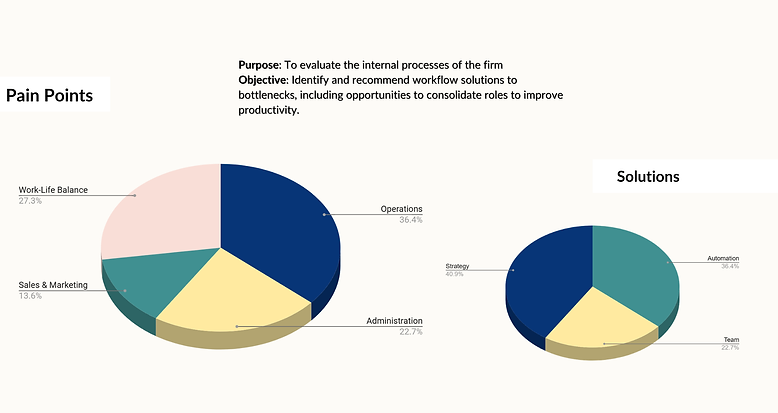
Operational Problem
Several operational challenges were creating friction across the organization.
Business development processes
-
Proposal preparation required manual coordination across documents and communications
-
Qualification responses were created from scratch each time
-
Prospect follow-up lacked a consistent process
Operational structure
-
Team roles and responsibilities were not clearly documented
-
Leadership frequently stepped into operational coordination
-
Workflow bottlenecks were difficult to identify
Individually these issues were manageable.
Collectively they created operational drag and limited scalability.
Strategic Intervention
The engagement focused on strengthening three core areas of the firm’s operations:
1. Operational visibility
A comprehensive process audit was conducted to evaluate:
-
internal workflows
-
role clarity
-
recurring administrative tasks
-
business development processes
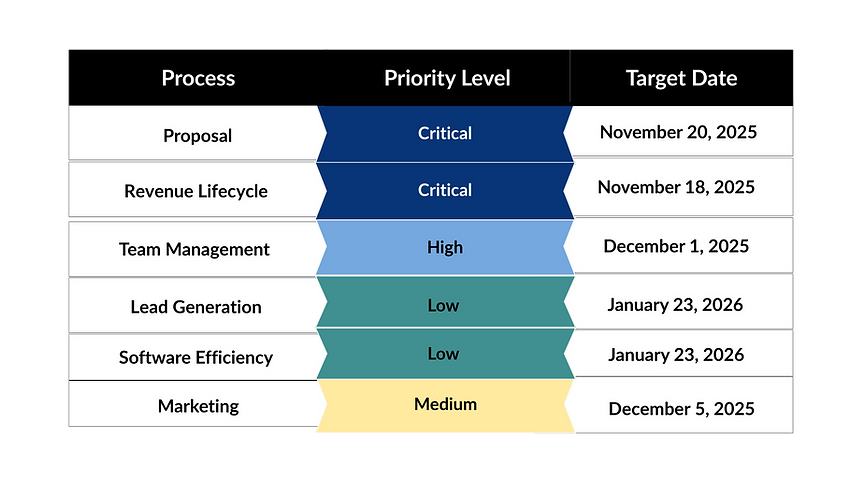
The audit produced a detailed report outlining workflow gaps, operational inefficiencies, and recommended improvements.
2. Proposal workflow automation
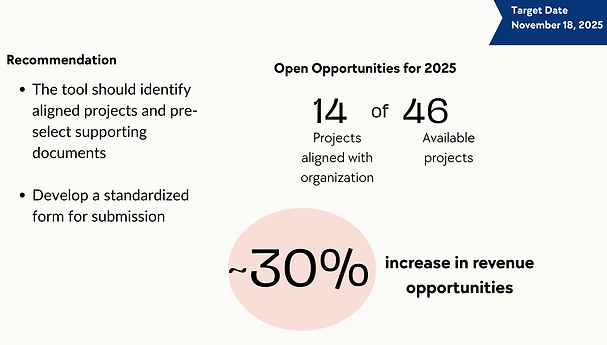
To streamline business development operations, I designed and implemented two AI-assisted automations:
-
automated fee proposal generation
-
automated proposal qualification responses
These systems reduced manual document preparation while creating a more consistent proposal workflow.
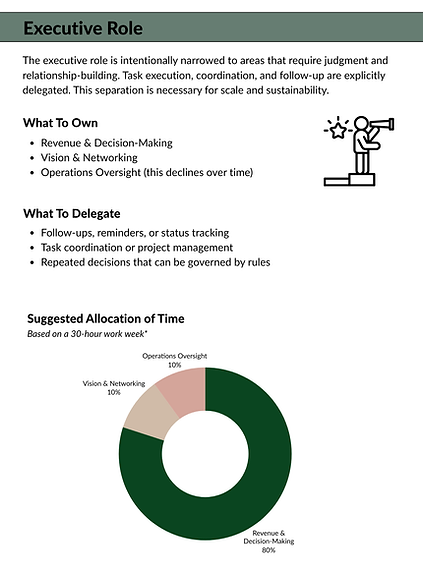
3. Executive time allocation strategy
To support leadership effectiveness, I developed a structured executive time allocation model including:
-
organizational chart defining team structure
-
executive schedule aligned with strategic priorities
-
team schedules and scopes of work
-
weekly leadership check-in structure
This framework allowed leadership to move away from reactive operational coordination and focus on higher-value strategic responsibilities.
Implementation
Operational improvements were implemented through several structured deliverables:
Operational Audit & Workflow Consultation
-
process audit
-
clarity consultation
-
review of roles and responsibilities
-
cost-benefit analysis of operational improvements
-
detailed workflow recommendations report
Proposal Infrastructure
-
development of AI-assisted proposal generation workflow
-
automation for proposal qualification responses
-
documentation for managing the proposal process
Prospect → Client SOP
A documented process outlining how the team manages:
-
incoming prospects
-
proposal preparation
-
follow-up communication
-
client conversion
Executive Operations Framework
-
organizational chart
-
executive time allocation schedule
-
team schedules and scopes of work
-
weekly operational check-ins
The engagement also included 90 days of operational support to ensure successful adoption of the new systems.
Outcomes
-
Clear operational visibility across internal workflows
-
Proposal preparation time reduced from several hours to minutes through AI-assisted automation.
-
Reduced manual workload in proposal preparation and qualification responses
-
Standardized Prospect → Client business development process
-
Executive time realigned toward strategic leadership activities
-
Organizational structure clarified with defined team responsibilities

I work with founders and leadership teams who are ready to bring greater clarity and structure to how their business operates.
The right systems don’t just support growth — they make it sustainable.
If you're ready to strengthen the operational foundation of your business, the next step is a discovery call.